
How industry research creates impact and drives change
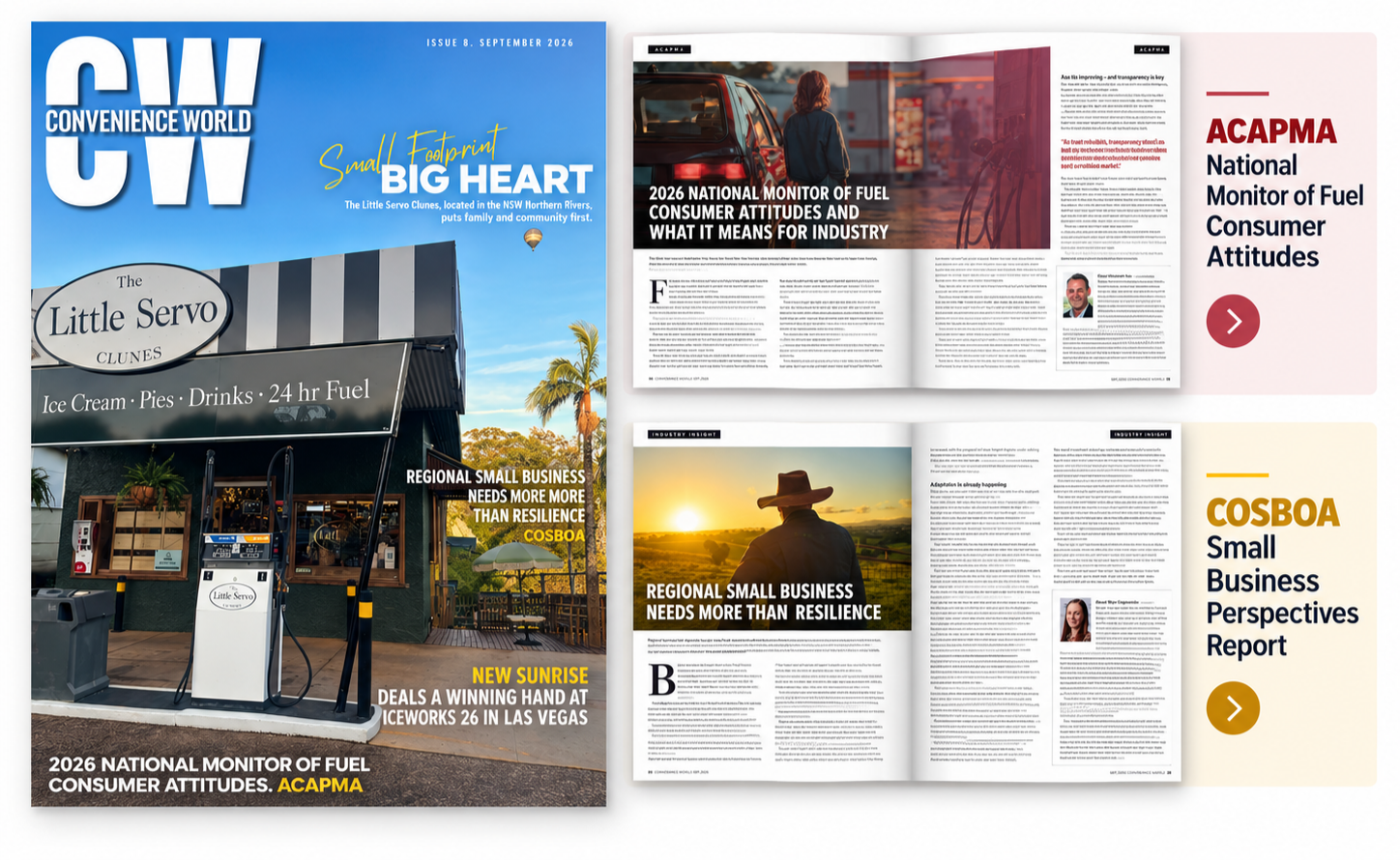
It was great to see two pieces of Survey Matters research featured in the latest issue of Convenience World this month: ACAPMA’s National Monitor of Fuel Consumer Attitudes and COSBOA’s Small Business Perspectives Report.
At one level, these are two very different research projects. One looks at how Australian fuel consumers are responding to price, convenience, trust, loyalty and fuel security. The other captures the pressures facing regional, rural and remote small businesses, from rising costs and workforce shortages to housing, digital connectivity and access to essential services.
But they have something important in common. Both put the spotlight on the issues facing the industry they represent. And both show the value of industry research that moves beyond internal reporting and into the wider conversation.
For ACAPMA, the National Monitor provides an evidence base for understanding how consumers are thinking and behaving in a period of significant pressure. Fuel prices, supply concerns and household cost-of-living pressures are not abstract policy issues. They affect where people shop, how loyal they are, what they expect from service stations and how they view the industry’s role in the broader economy. We were thrilled to present the research at the 2026 ACAPMA National Conference earlier this month.
For COSBOA, the 2026 Small Business Perspectives Report gives regional small businesses a clear voice in national policy discussions. The findings show businesses operating under sustained pressure, with higher operating costs, workforce challenges, housing shortages and service gaps all shaping what it means to run a small business outside the major capitals. The report was launched at the 2026 National Small Business Summit and has been widely quoted across mainstream media, including The Australian, Seven, News24, ABC and news.com.au, as well as sector and industry media publications.
This is where good research earns its place.
The strongest industry research does not simply produce a report. It gives organisations evidence it can use repeatedly: in media commentary, member communications, government submissions, conference presentations, social media promotion, stakeholder briefings and strategic planning.
It also helps associations and peak bodies shift the conversation from anecdote to evidence. Many leaders already know what their members are experiencing. What robust research does is quantify it, test it, segment it and give it the credibility needed to influence others.
That’s particularly important right now, because the issues facing industries are increasingly complex. Fuel security, consumer confidence, AI and risk management, workforce shortages, regional infrastructure, cost pressures and changing expectations cannot be understood through a single data point. They need research that connects lived experience with broader economic and policy questions.
The Convenience World coverage is a useful reminder that research has a life beyond the launch date. When the evidence is strong and the story is clear, it continues to create value, helping industries explain what is changing, what is at risk and where decision-makers need to pay attention.
For associations, that is the real opportunity. Industry research is not just a way to understand members. It is a way to lead the conversation on their behalf.