
One of the more satisfying things about research is seeing what happens to it once it leaves your hands.
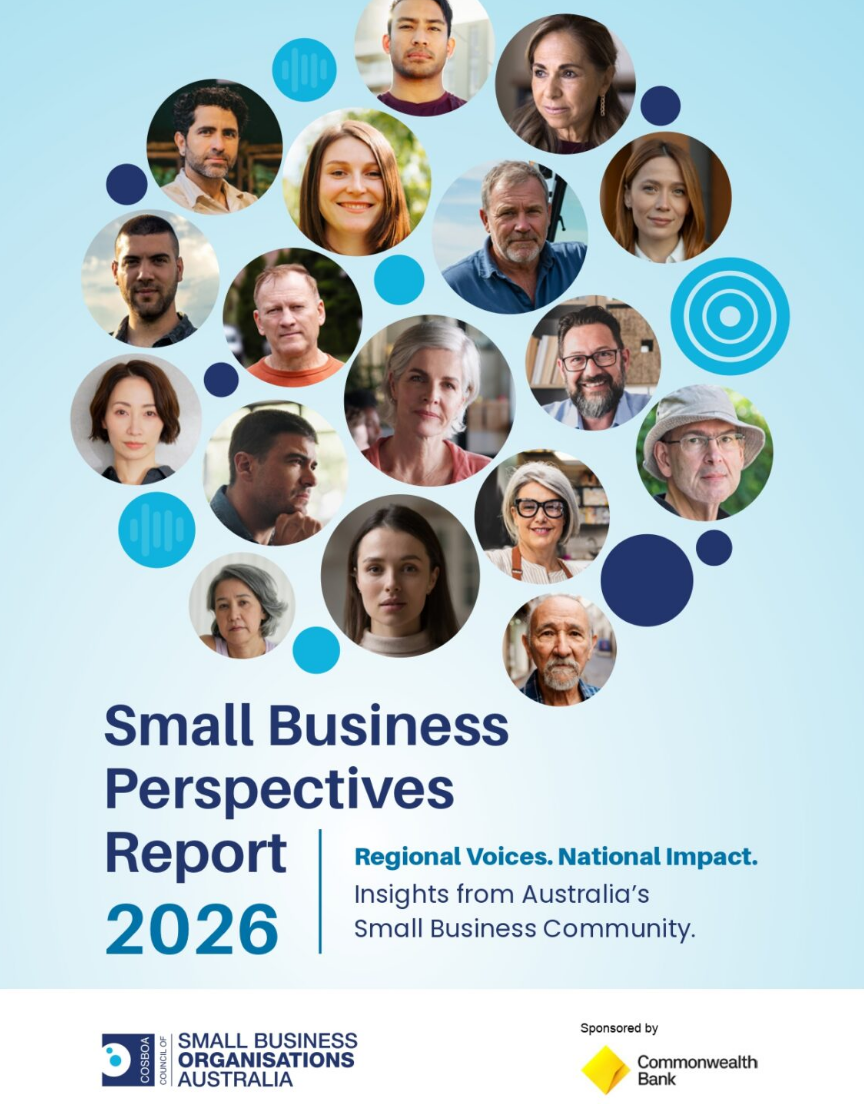
Earlier this year, Survey Matters conducted the fifth edition of COSBOA's Small Business Perspectives Report, with support from Commonwealth Bank. This year's study focused on the experience of small businesses in regional, rural and remote Australia, with 572 businesses taking part through COSBOA's member and stakeholder networks.
The findings painted a difficult picture of the conditions facing regional small businesses.
Operating expenses had increased for 87% of businesses, while only 16% reported revenue growth and 73% said profits had fallen. But the research also showed that the pressures extend well beyond business costs.
Regional businesses reported persistent difficulties finding skilled workers, alongside problems with housing, childcare, healthcare and digital connectivity that make it harder to attract and retain people. Only 24% rated mobile coverage on the roads in their area positively, while more than half rated access to suitable housing as poor.
There was also a significant personal toll. More than three-quarters of respondents had experienced business-related stress or anxiety over the previous year, while around two in three reported losing sleep or feeling burned out.
Taken together, the findings gave COSBOA a much broader evidence base for its advocacy. They showed that the challenges facing regional small businesses are not simply about the cost of doing business, but also about the infrastructure, services and workforce conditions that determine whether businesses, and the communities around them, can thrive.
When other people use the evidence
Once the report was released, it was picked up by national and specialist media.
The Australian led with the report's findings on rising costs and falling profitability, while specialist business media including Australian Brokerand Broker Dailyused the research to explore the links between housing shortages, workforce pressures and the viability of regional businesses.
The findings also became part of the conversation at COSBOA's National Small Business Summit. Commonwealth Bank's Executive General Manager for Small Business, Rebecca Warren, opened the second day with findings from the research.
Later, Gurmesh Singh MP, Leader of the NSW Nationals and Shadow Minister for Small Business and Regional NSW, cited the report, including the finding that 77% of regional business owners had experienced stress or anxiety in the past year, as he discussed policy responses to the pressures facing regional small businesses.
The research also surfaced in discussions about regulation, workforce pressures, tax and the pressures facing small businesses throughout the Summit, including in a session facilitated by COSBOA CEO Skye Cappuccio on the specific challenges facing regional businesses.
For COSBOA, this is where the value of a strong evidence base becomes particularly clear. The research was no longer simply describing the experience of its constituency. It was helping put those experiences into the media and policy conversation.
Building evidence that can be trusted
That only works if people have confidence in how the numbers were produced.
For the Small Business Perspectives study, 572 regional businesses participated across industries and locations. The questionnaire covered business conditions, costs, workforce pressures, infrastructure and services, as well as the personal impact of running a small business.
The methodology matters because the report was designed to do more than describe sentiment. COSBOA wanted evidence it could use with government, industry and other stakeholders, which meant being clear about who responded, how the questions were asked and what conclusions the data could reasonably support.
The sample was weighted by industry sector using ABS Counts of Australian Small Businesses, so the results better reflected the composition of the regional small business population rather than simply who happened to respond. Statistical testing was used to identify differences between groups that were supported by the data, while ten open-ended questions generated thousands of comments that were coded thematically to add context to the quantitative findings.
The results were also considered alongside contemporary external evidence, including research from the Regional Australia Institute, Jobs and Skills Australia, CPA Australia and the ABS.
None of this is necessarily the most visible part of a research project, but it is what gives the findings credibility beyond the organisation that commissioned them and makes it easier for others to use the evidence with confidence.
From experience to evidence
Industry bodies often have a very good sense of what is happening within their sector. They hear it through member conversations, committees, events and direct feedback.
Research adds something different. It tests whether those experiences are widespread, shows where they differ across the industry and gives an organisation evidence it can use publicly.
The Small Business Perspectives research is a good example. By focusing this year's study on regional Australia, COSBOA has been able to put numbers around issues that small business owners have been raising for some time, not only rising costs and falling profitability, but workforce shortages, housing, essential services, connectivity and the personal toll of keeping a business running.
That gives COSBOA evidence it can take into its conversations with government and industry. Just as importantly, it gives other people credible evidence they can use when talking about the conditions facing regional small businesses.
And that is when research starts to do more than document what is happening.
It becomes part of the conversation.